1
Control light
Shorten the photoperiod and block direct sun.
Most tanks do better with a consistent timer. Big swings and window light make algae harder to diagnose.
 The Hidden ReefAquariums · Fish · Coral · Ponds
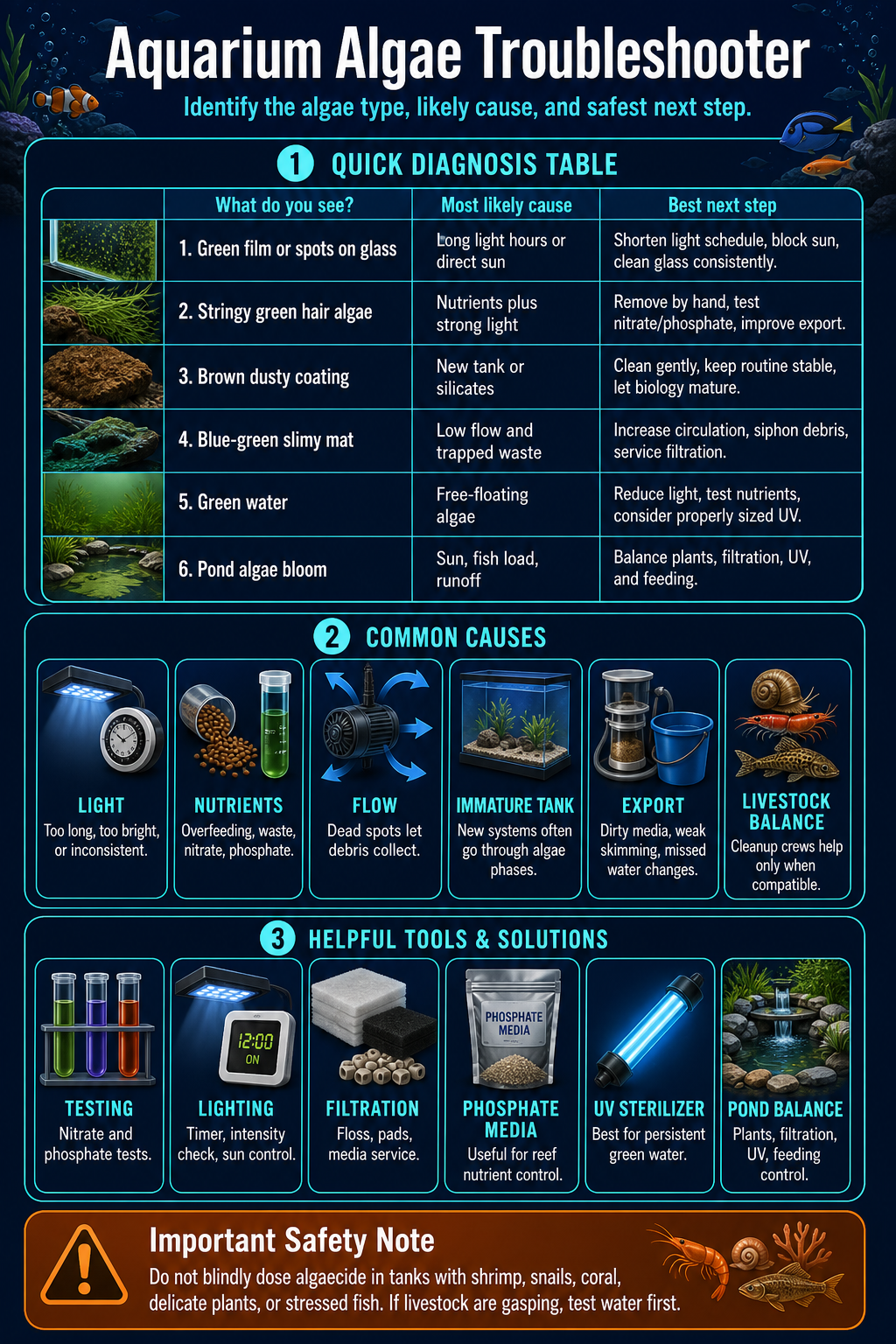
Algae usually means light, nutrients, maintenance rhythm, or flow are out of balance. Identify the type first, then correct the cause instead of just scrubbing the symptom.
The safest fixes reduce fuel and improve export.
Most tanks do better with a consistent timer. Big swings and window light make algae harder to diagnose.
Low readings can still hide algae-bound nutrients, but testing gives the conversation a starting point.
Pull out loose algae, siphon debris, rinse mechanical media, and avoid dumping in extra food.
The type points to different causes and different next steps.
Usually normal in lit tanks, but fast regrowth suggests too much light, direct sun, excess nutrients, or inconsistent glass cleaning.
Often tied to long light hours, excess nutrients, poor plant competition, weak cleanup crew, or reef nutrient imbalance.
Common in newer freshwater and saltwater tanks. Often fades as the tank matures, especially with good cleanup and stable maintenance.
Slimy mats point toward dead spots, trapped organics, imbalance, and low flow. It needs cause correction, not just surface removal.
If the water itself is green, think light, nitrate, phosphate, direct sun, and properly sized UV sterilization.
Sunlight, fish load, runoff, plant coverage, filtration, and UV sizing all matter more outside than one bottle of treatment.
Use this before adding treatments or making several changes at once.
Most cases are a mix of these, not one magic cause.
Timers beat memory. Stable light schedules make algae control much easier, especially in planted and reef tanks.
Overfeeding, dirty substrate, dead plant matter, and clogged media all add fuel for algae and cyano.
Low-flow corners collect organics. Cyano and nuisance algae often start where debris settles and circulation is weak.
Brown diatoms and early algae phases are common while the tank matures. The goal is steady correction, not a full reset.
Mechanical media, skimmers, reactors, water changes, and plant growth all export nutrients when used correctly.
Snails, shrimp, algae eaters, and pond plants can help, but only when compatible with the tank and the actual algae type.
Match the fix to the cause, not a random algae cure.
These give you a baseline for reef, planted, and pond algae problems.
Shop maintenanceA timer, correct intensity, and fewer direct-sun hours solve more algae cases than most people expect.
View lightingBetter mechanical capture and regular media service reduce organics before algae gets them.
View filtrationUseful when phosphate control needs steady flow through media instead of occasional guesswork.
View reactorsBest for free-floating green water when sized and plumbed for the right contact time.
View UV clarifiersOutdoor algae control is about sun, fish load, plant coverage, filtration, and UV working together.
Shop pondDo not dose algae treatments into tanks with shrimp, snails, coral, delicate plants, or stressed fish without checking compatibility. If livestock are gasping or ammonia/nitrite is present, treat it as a water-quality emergency first.
Compare with the cloudy water guide