1
Oxygen
Add surface movement now.
Aim the filter return upward, add an air stone, or lower the water level slightly so water breaks the surface.
 The Hidden ReefAquariums · Fish · Coral · Ponds
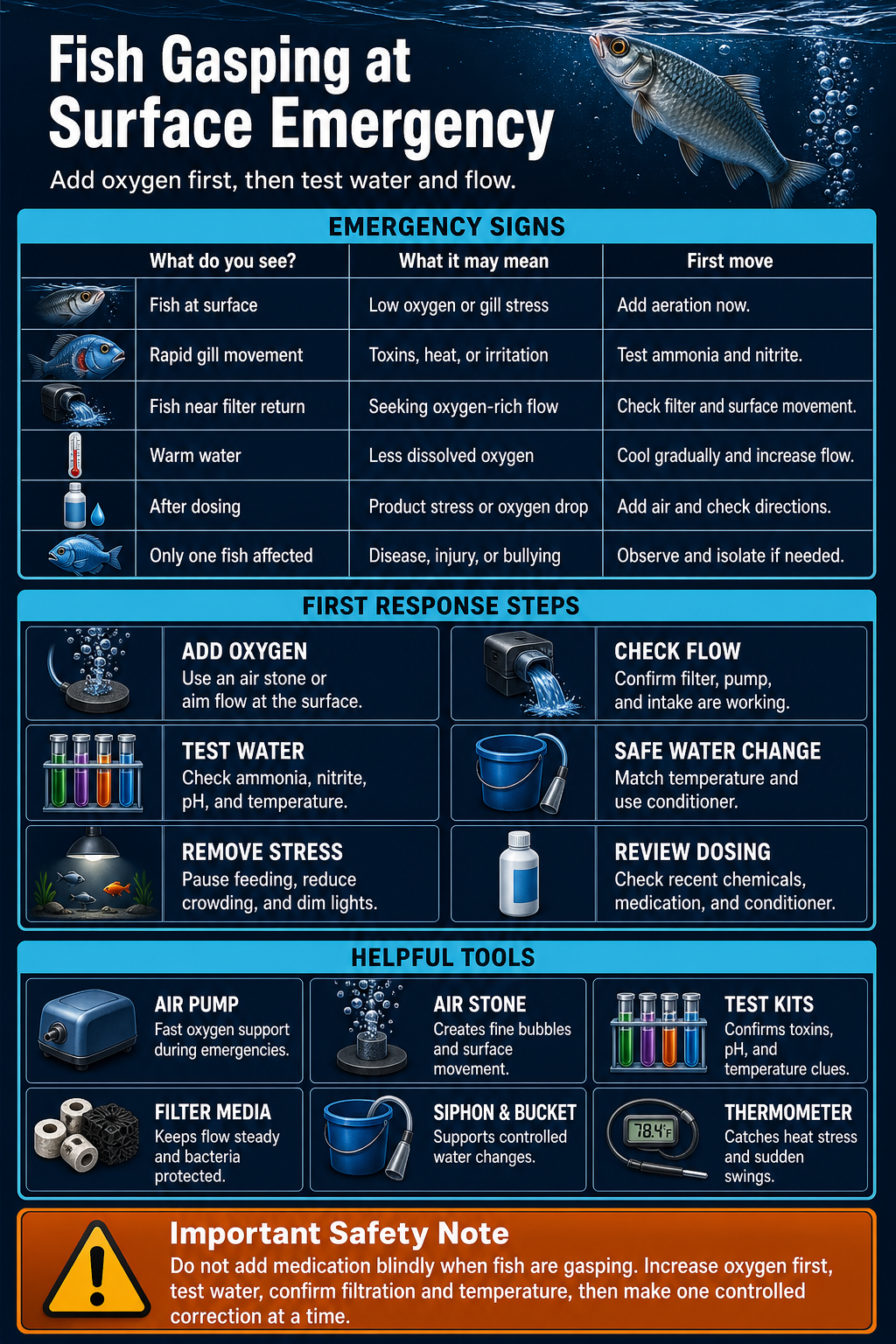
Fish breathing at the surface are telling you something is interfering with oxygen uptake. Increase aeration first, then check temperature, flow, ammonia, nitrite, stocking pressure, and recent chemical or medication changes.
Gasping can turn urgent quickly, so start with oxygen support while you test.
Aim the filter return upward, add an air stone, or lower the water level slightly so water breaks the surface.
Any positive reading can irritate gills and make fish breathe hard even if the water looks clear.
Warm water holds less oxygen. Review temperature, power outages, medication, conditioner mistakes, and new livestock.
Surface breathing has several causes, but the first response is usually the same.
When many fish gather near the surface or filter return, suspect low oxygen, toxins, heat, or poor circulation.
Fast gill movement can come from ammonia, nitrite, chlorine, medication stress, parasites, or oxygen shortage.
A single fish may have injury, bullying stress, disease, gill parasites, or species-specific oxygen needs.
A clogged intake, stalled pump, dirty media, or low water level can reduce oxygen exchange quickly.
Warm tanks hold less oxygen, especially during heat waves, medication use, or heavy stocking.
Recent additives, untreated tap water, medication, or conditioner errors can irritate gills and lower oxygen.
Use this when fish are breathing hard or staying near the surface.
Most cases trace back to oxygen exchange, toxins, heat, or stress on the gills.
Still surfaces, covered tanks, weak returns, and heavy stocking can leave fish short on dissolved oxygen.
Both can damage or irritate gills, making fish breathe hard and seek high-flow areas.
Warm water carries less oxygen and can push already stressed fish into emergency breathing.
Some treatments reduce oxygen or irritate gills, especially if overdosed or mixed with other products.
Clogged intakes, dirty impellers, low water level, or power loss can reduce circulation and oxygenation.
If one or a few fish are affected while others breathe normally, inspect for disease, injury, or bullying.
Start with oxygen support, water testing, flow fixes, and safe water correction.
Testing separates oxygen shortage from toxin exposure, cycling trouble, and heat stress.
Shop maintenanceConditioned water changes help when toxins, chlorine, or dosing mistakes are part of the problem.
Shop maintenanceExtra surface movement is the fastest way to support fish while the cause is being confirmed.
View filtrationHealthy circulation keeps oxygen moving through the tank and prevents stagnant surface film.
View filtrationControlled water changes can dilute toxins without shocking already stressed fish.
Shop maintenanceActivated carbon or medication changes may help in some dosing problems, but compatibility matters.
View filtrationDo not add more medication blindly, shut off filtration, ignore temperature, or assume surface gasping is always parasites. Add oxygen first, test water, and make one controlled correction at a time.
Compare with the ammonia spike guide