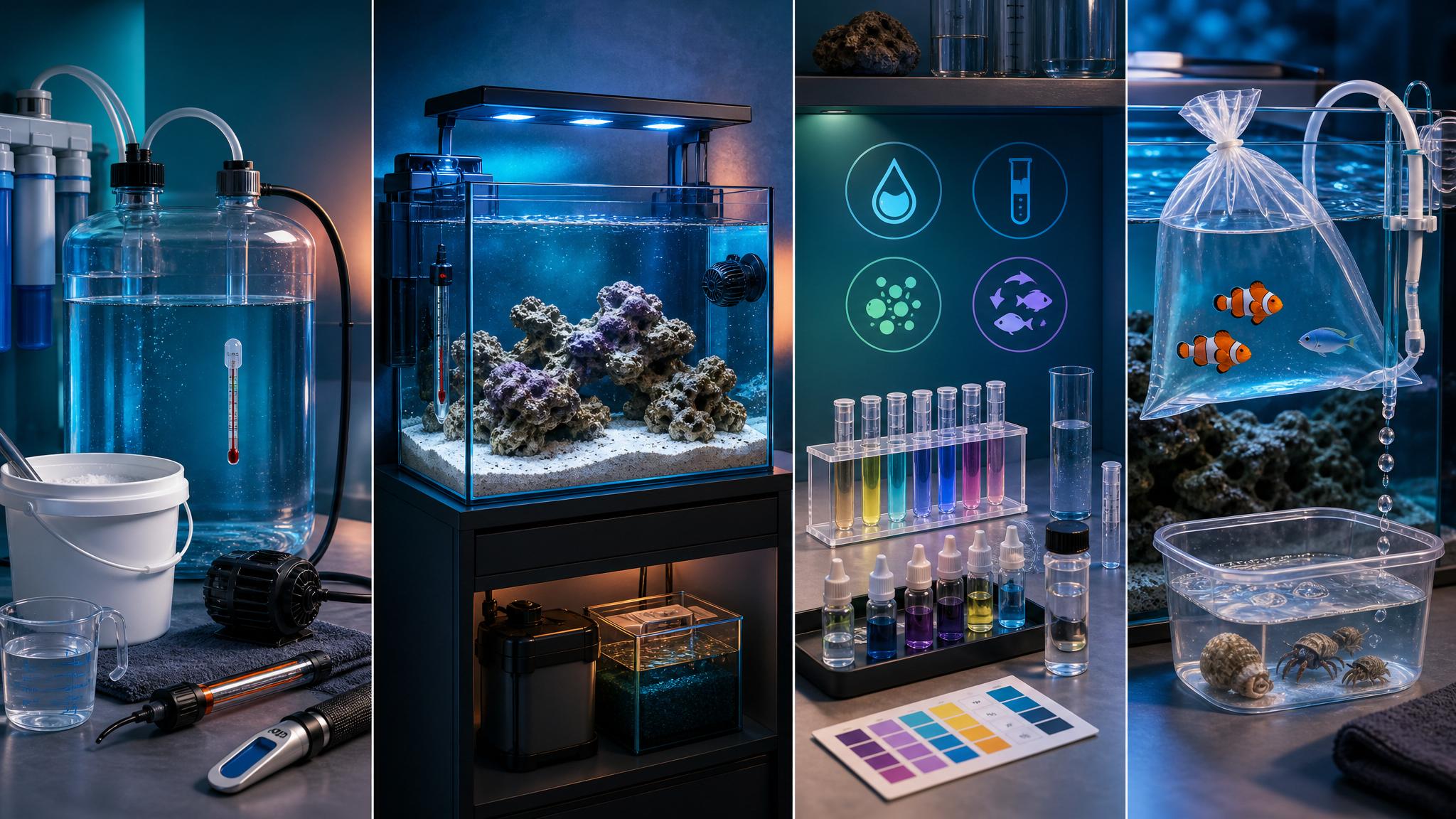
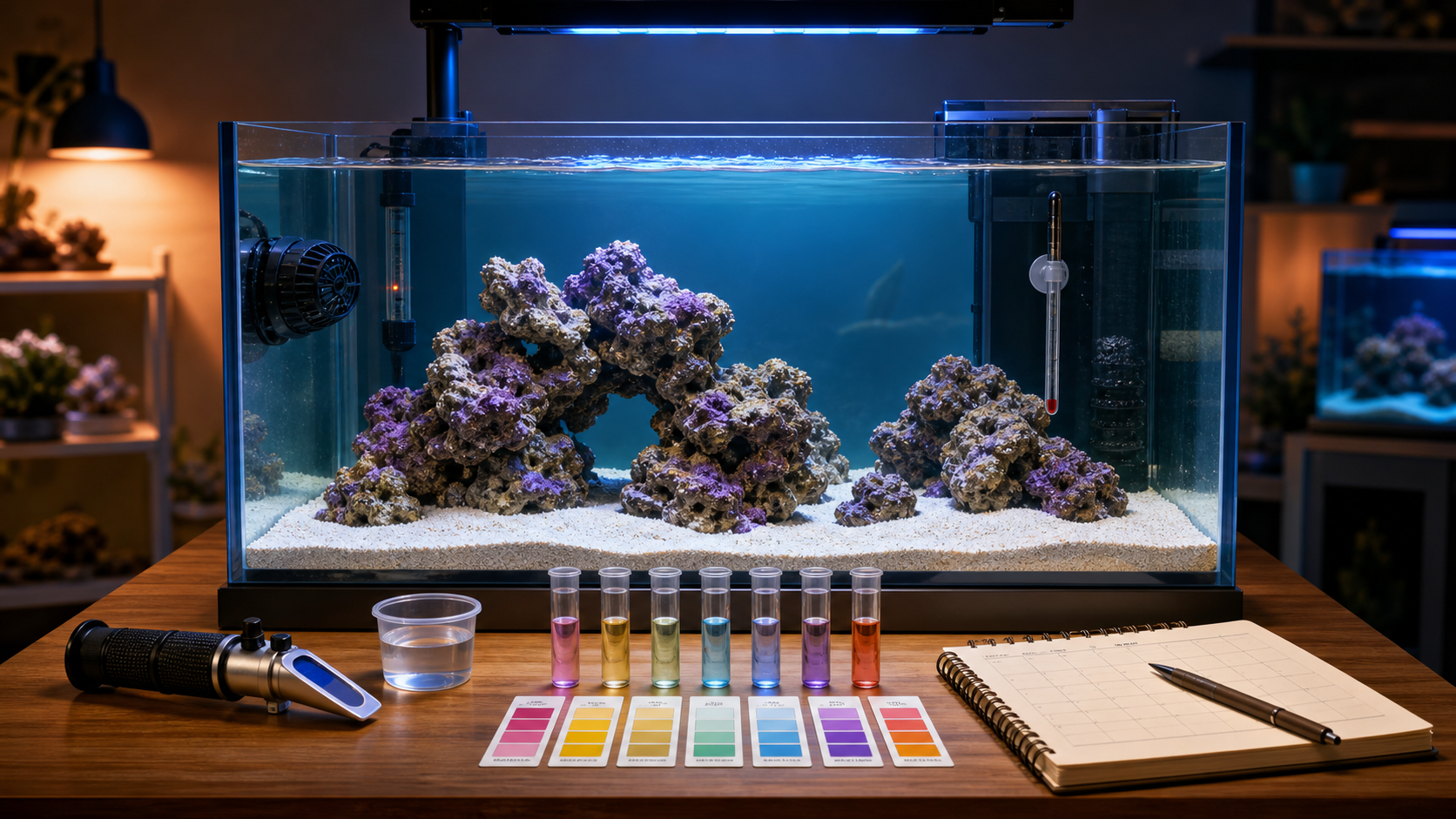
Start with stable saltwater, simple equipment, live rock, and careful testing before you buy livestock. This guide keeps the first marine tank focused and manageable.
The goal is stable salinity, strong circulation, and predictable water tests before animals go in.
01
Plan the water source
Saltwater starts with clean source water and consistent mixing. Do not guess salinity by scoop count.
Use RO/DI water or prepared saltwater
Mix salt in a separate container with heat and flow
Check salinity with a refractometer before use
02
Build the basic system
Keep the first setup simple: tank, heater, flow, filtration, sand, and rock before advanced reef gear.
Use aragonite sand and stable live rock structure
Add a heater, thermometer, and wave pump
Keep cords, access, and top-off space in mind
03
Cycle and test
The biological filter still has to mature. Saltwater adds salinity and alkalinity stability to the usual cycle checks.
Track ammonia, nitrite, nitrate, and pH
Check salinity every time water is added
Begin alkalinity and phosphate checks for reef plans
04
Add livestock slowly
Start with hardy fish and cleanup crew basics. Corals and delicate animals can wait until the tank proves stable.
Acclimate livestock slowly
Wait and retest between additions
Avoid overstocking the first month
First shopping trip
What to bring home first
Bring home the water tools and life-support pieces first. Livestock should come after the tank is mixed, running, and testable.
Water prep
RO/DI or prepared saltwater
Consistent water is the foundation. Tap water problems are harder to fix after rock and animals are in the tank.
RO/DI water source or store-mixed saltwater
Salt mix if mixing at home
Dedicated mixing bucket or container
Life support
Heat, flow, and filtration
Marine tanks need steady temperature, oxygen exchange, and enough circulation around rockwork.
Heater and thermometer
Wave pump or powerhead
Filter, rear chamber, or sump path
Testing
Refractometer and kits
Saltwater success depends on measuring salinity and watching the cycle instead of assuming the tank is ready.
Refractometer and calibration fluid
Ammonia, nitrite, nitrate, and pH tests
Alkalinity and phosphate tests for reef plans
Aquascape
Rock, sand, and cleanup tools
Rock and sand shape the biological filter, flow pattern, and hiding places for future livestock.
Aragonite sand
Live rock or dry rock plan
Algae scraper, bucket, and siphon
Rock first
Let the tank stabilize
Live rock and biological media need time to process waste. Keep salinity and temperature steady, confirm ammonia and nitrite are under control, then start with hardy beginner livestock and a modest cleanup crew.