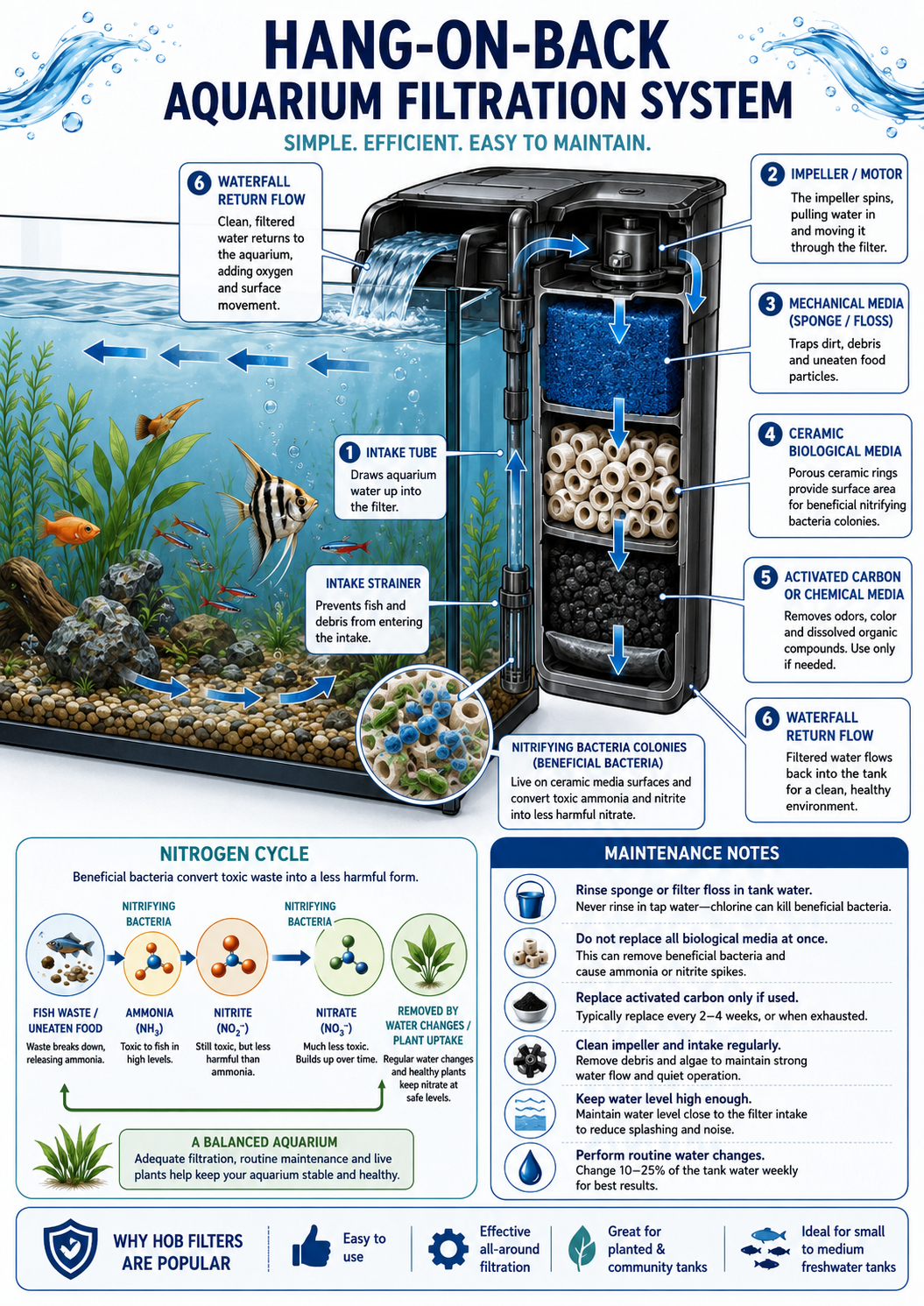
Hang-on-back filter
Good all-around choice for beginner freshwater tanks when you want simple setup, easy access, and visible return flow.
Open diagramStart with the tank size, livestock, maintenance style, and where the equipment can live. Most filters can keep a tank healthy when they are sized correctly and maintained without destroying the bacteria living inside them.
Use this as a starting point, then adjust for stocking level, feeding, plants, coral, and how often the tank will be serviced.
Good all-around choice for beginner freshwater tanks when you want simple setup, easy access, and visible return flow.
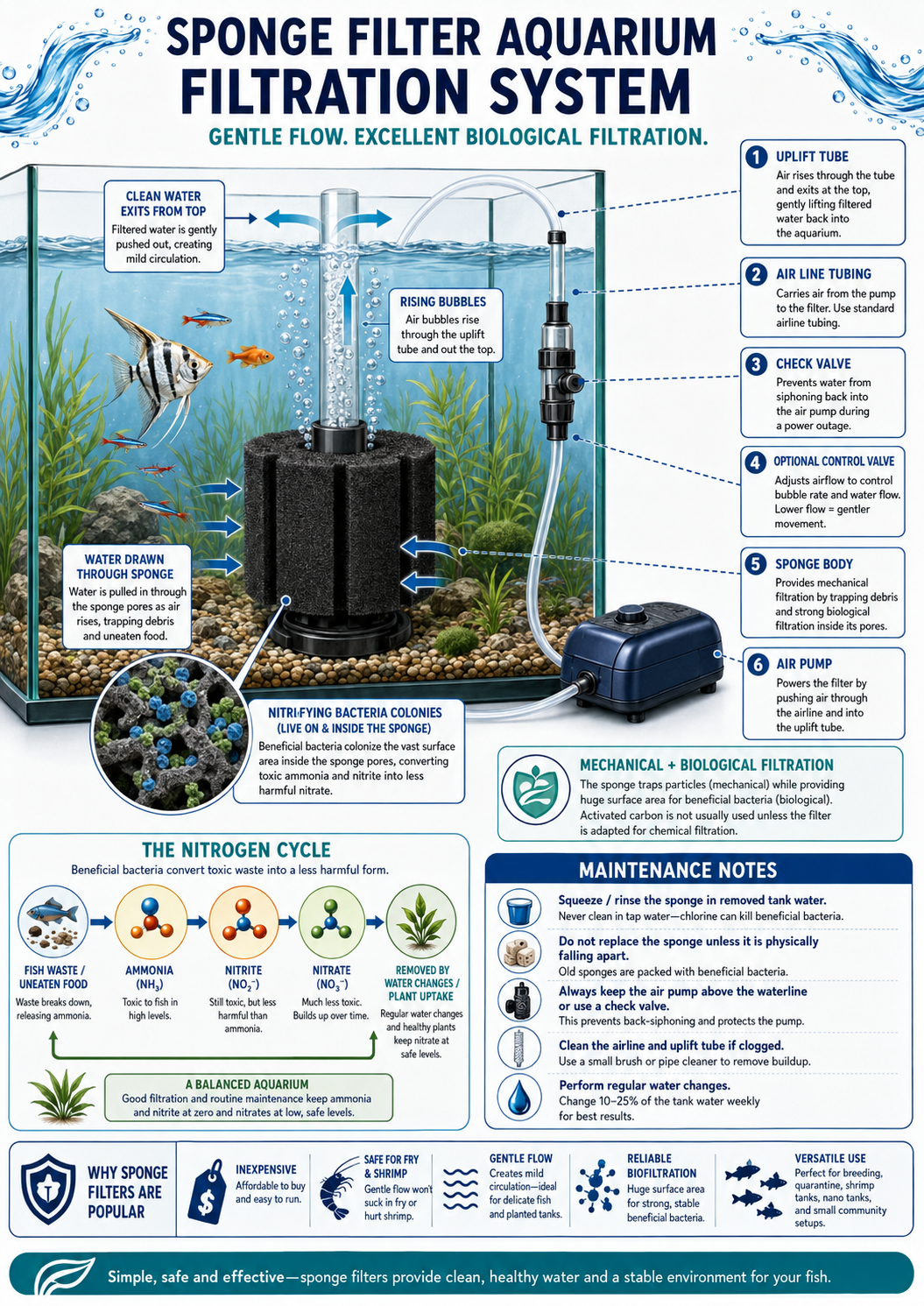
Open diagramGentle flow, strong biological filtration, low cost, and very low risk of pulling tiny animals into the intake.
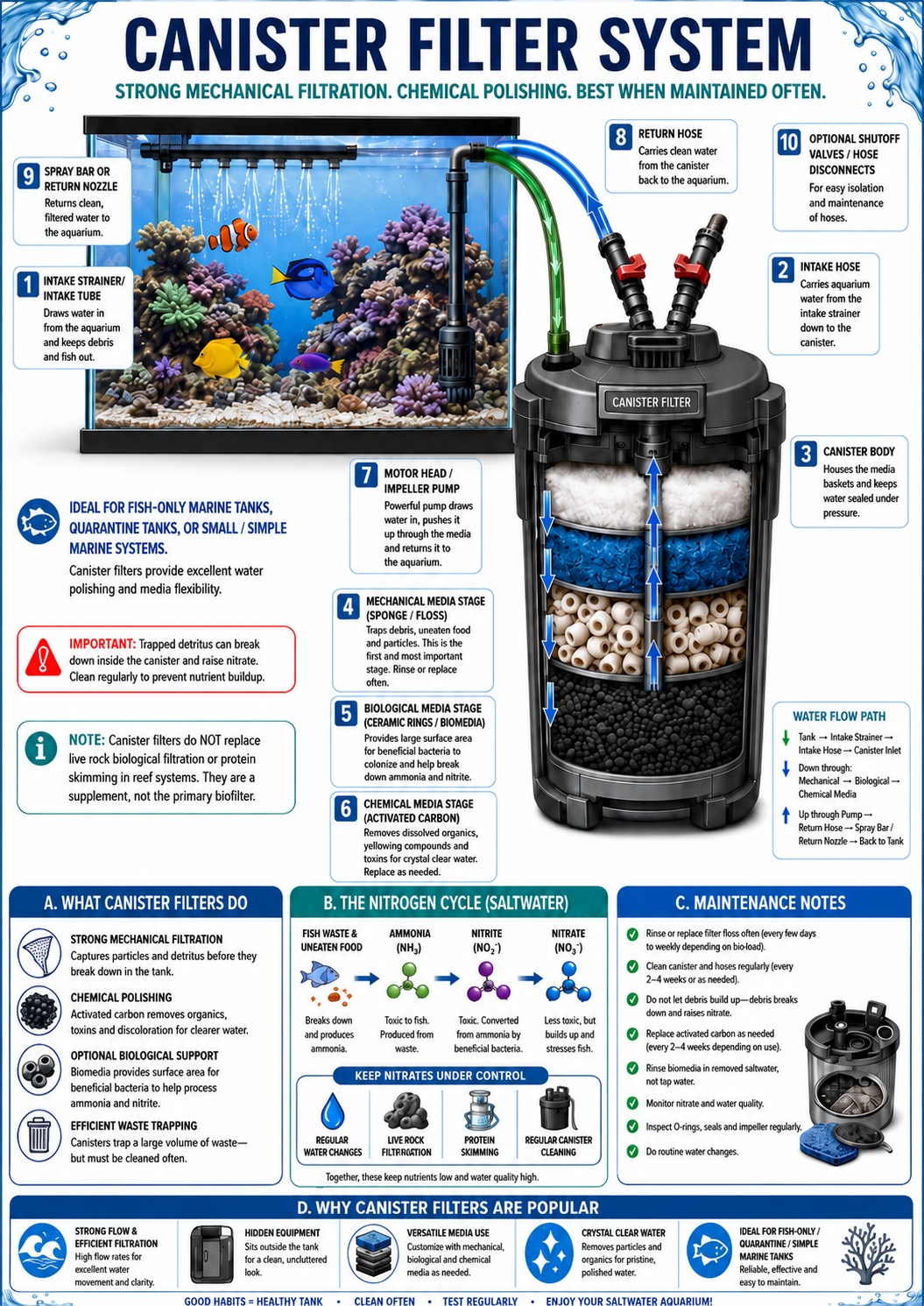
Open diagramUseful when you want more media capacity, cleaner display lines, and flexible mechanical, biological, and chemical media.
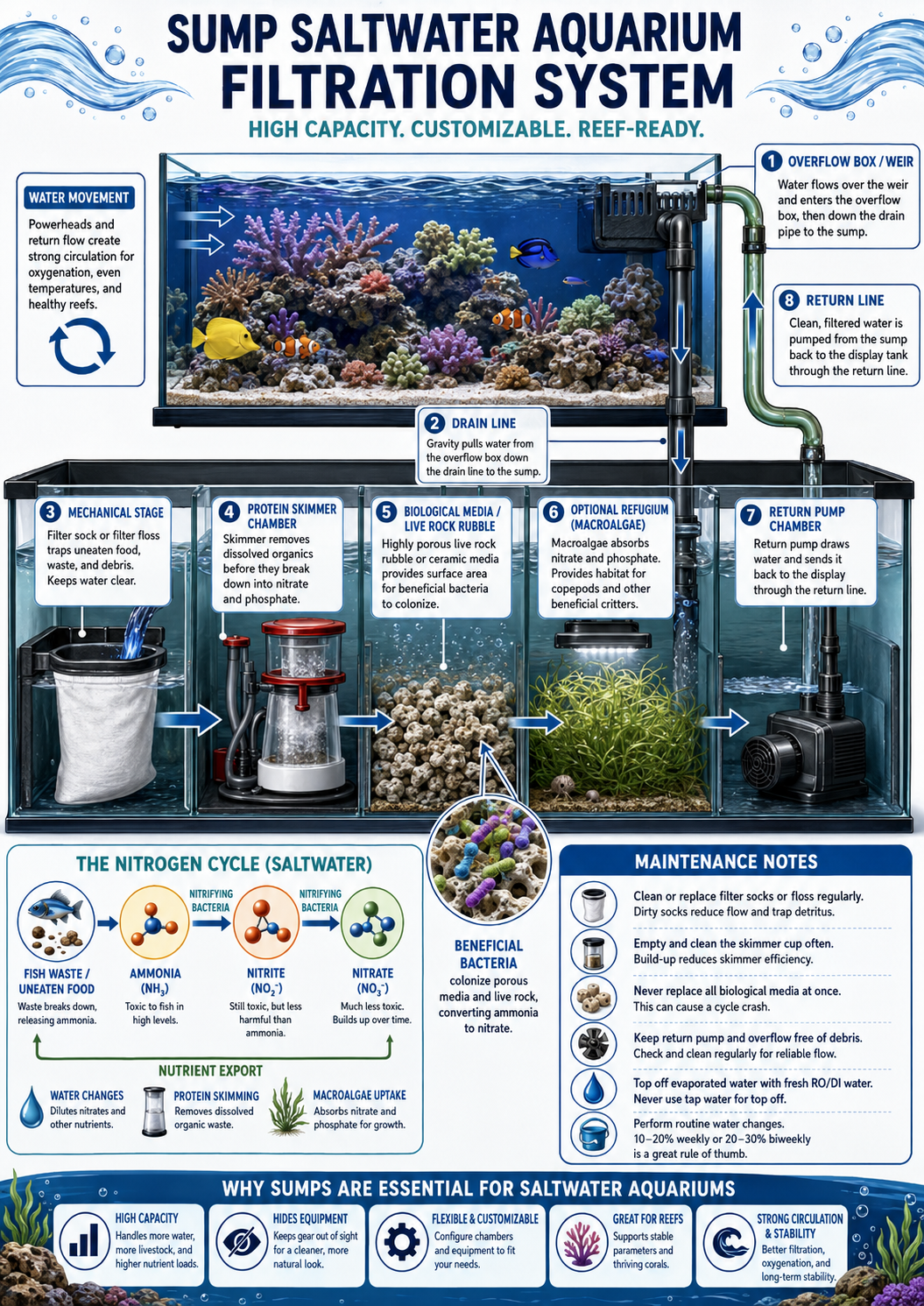
Open diagramBest when the system needs extra water volume, hidden equipment, stronger oxygen exchange, and room for future gear.
Open diagramGood for compact saltwater setups where filtration, heater, media basket, and return pump sit behind the display.
Open diagramThe filter style matters, but the habits around it matter more.
Filter media is living biological infrastructure. Clean it gently and keep some seasoned media in place.
High flow helps oxygen and debris pickup, but some fish, fry, shrimp, and long-finned species need gentler movement.
The best filter is the one that is sized well and easy enough for the owner to maintain consistently.
A filter processes and traps waste. It does not erase nitrate, dissolved organics, or the need for regular maintenance.
A quick photo and a few tank facts make filter recommendations much more accurate.
Gallons matter, but so do footprint, height, stand space, and whether the tank is drilled.
Goldfish, cichlids, shrimp, reef fish, coral, and pond fish put very different demands on filtration.
Bring current ammonia, nitrite, nitrate, pH, temperature, and salinity if the tank is already running.
Hidden equipment, quiet operation, low cost, easy cleaning, and future upgrades all change the right pick.